










The Story Behind Studio 4 Kids:
The Language We Carry
Where It Really Began
Some of my happiest memories are from my parents’ home in Egypt, playing with my sisters, laughing, and growing up surrounded by family.
Family gave those memories their warmth, but language gave them a voice. It carried our stories, jokes, songs, and everyday conversations. It was how love, comfort, and belonging passed from one generation to the next.
For me, that language was Arabic.
Arabic became the sound of home. It connected me to my parents, my sisters, my culture, and all the little moments that shaped my childhood.
Years later, I found myself raising our child far from the home and family I grew up with. I wanted him to feel close to Arabic and to everything the language carried from my childhood. Not as a lesson he had to study, but as something warm, familiar, and naturally part of who he was.
I began searching for an app that could introduce him to the Arabic alphabet in a way that felt right for his age. I wanted native pronunciation, thoughtful teaching, beautiful design, and play with a real learning purpose.
I could not find that experience.
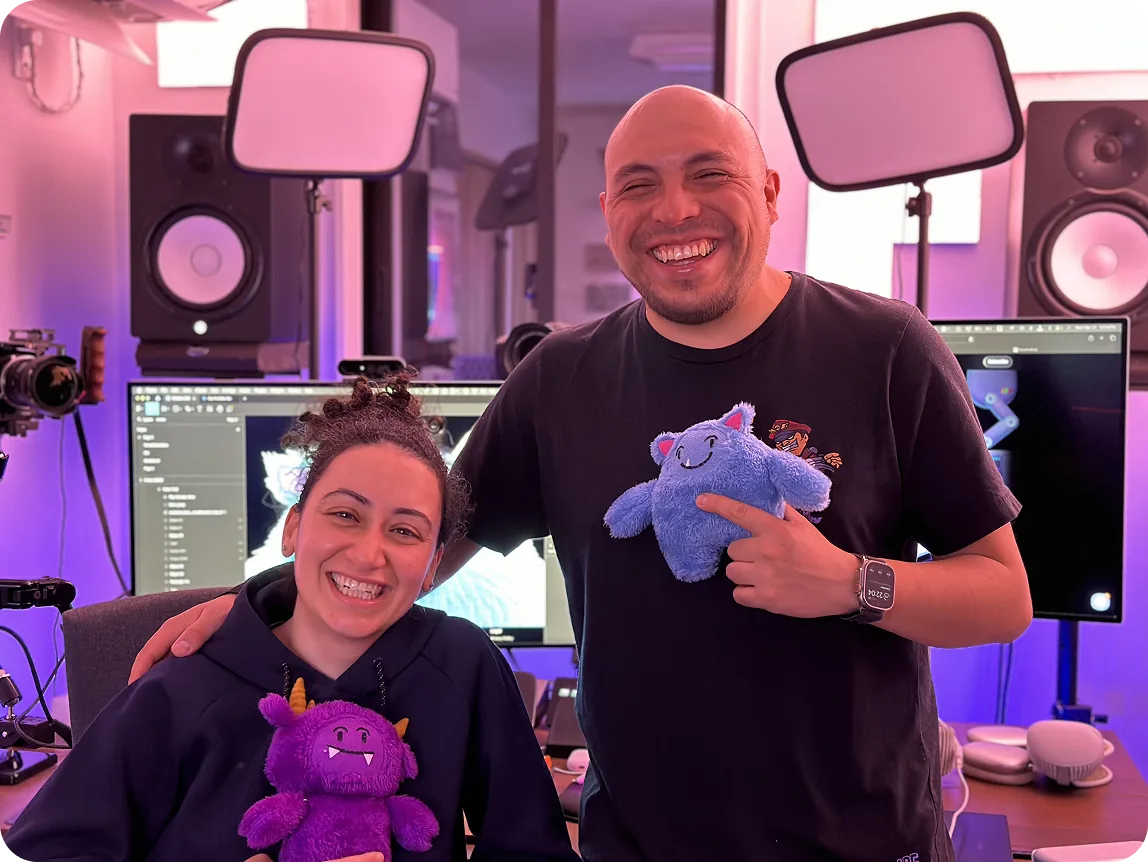
So I brought the idea to Daniel, and together we decided to create it ourselves.
That is how Arabic4Kids began. Not as a business idea, but as something I wanted for my own child.
As we continued building, we realized this feeling was not only about Arabic. Every family has a language that carries its memories, whether that language is Arabic, English, French, Spanish, or another language entirely.
As parents, we want our children to inherit more than words. We want them to feel some of the love and belonging carried through those words.
Making Arabic Feel Close
Once we decided to create Arabic4Kids, the question was not how to fit more content onto a screen. It was how to make a child’s first meeting with the Arabic alphabet feel natural, joyful, and worth returning to.
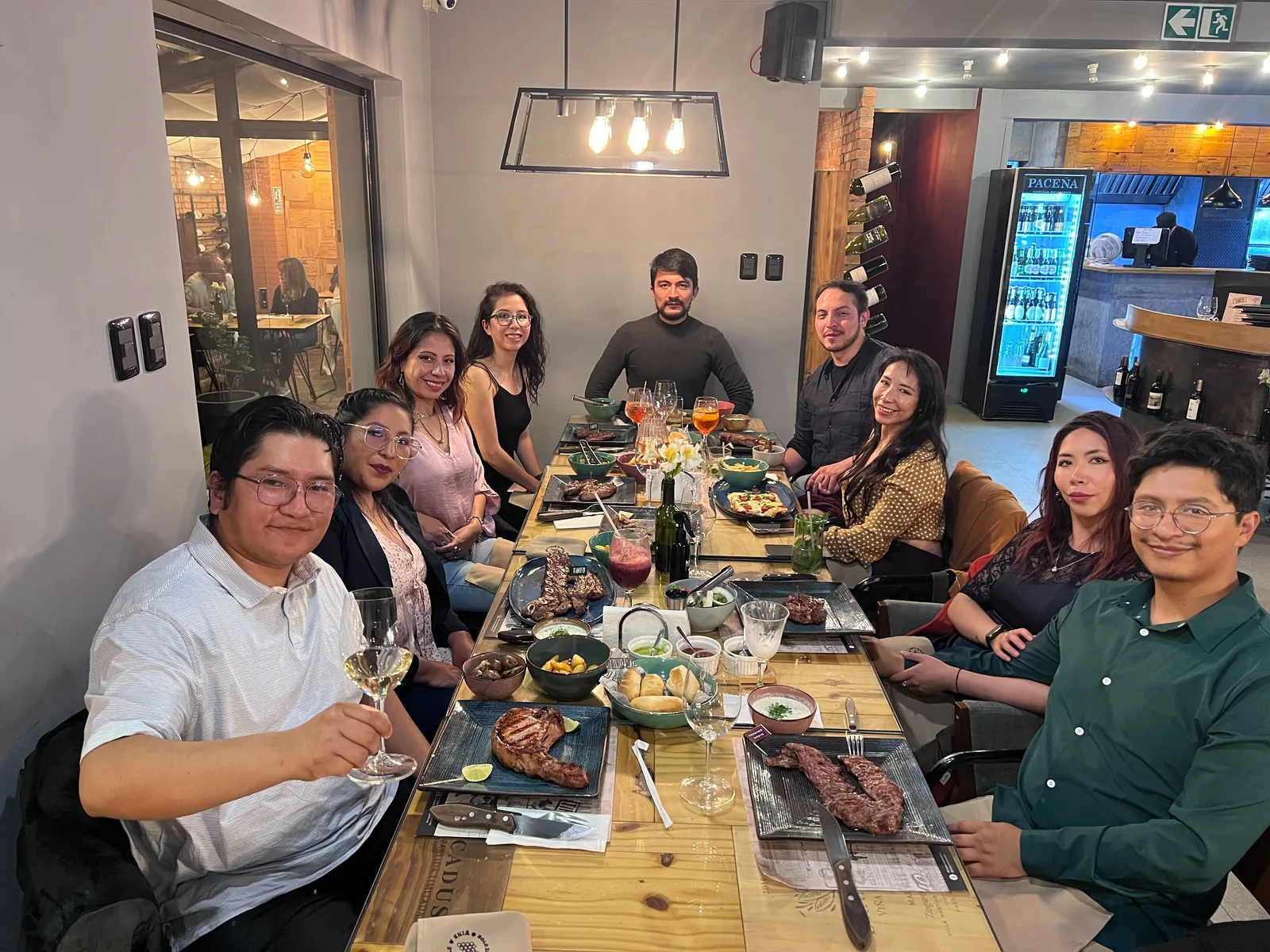
I led the product and learning experience, while Daniel shaped the visual worlds, characters, and motion. Together with our team, we built short activities that help children hear, recognize, form, trace, match, and remember each letter.
Arabic4Kids introduces all 28 Arabic letters to children ages 3 to 8. Families can choose Modern Standard Arabic or Egyptian Arabic, and every voice is recorded by a native speaker. Parents can follow progress, while children learn without ads or unnecessary distractions.
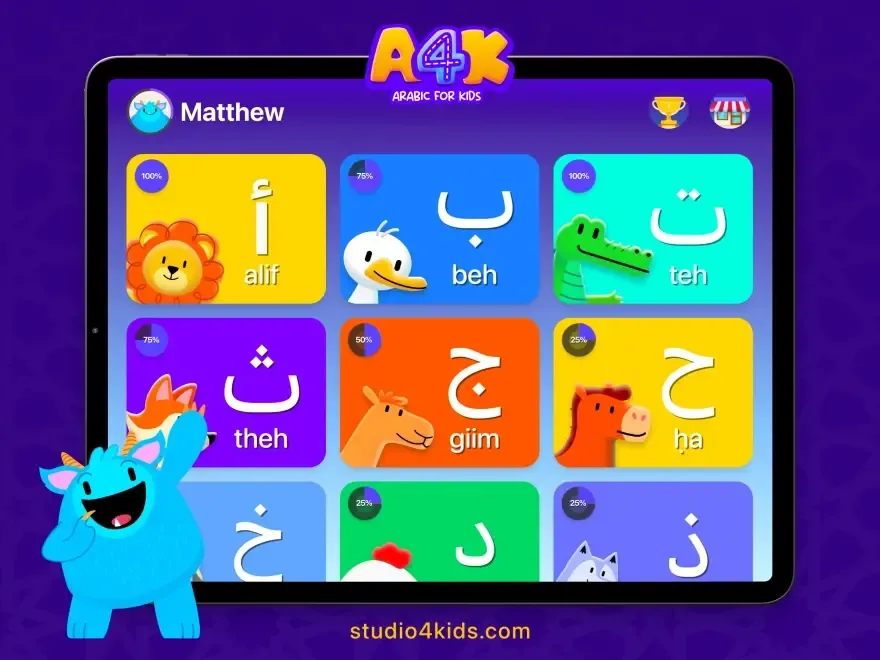
The deeper thinking behind our use of sound, touch, tracing, and animation is explored in Learning by Touch, Sound, and Sight. Our approach to the human craft behind the apps is shared in Crafted by Humans.
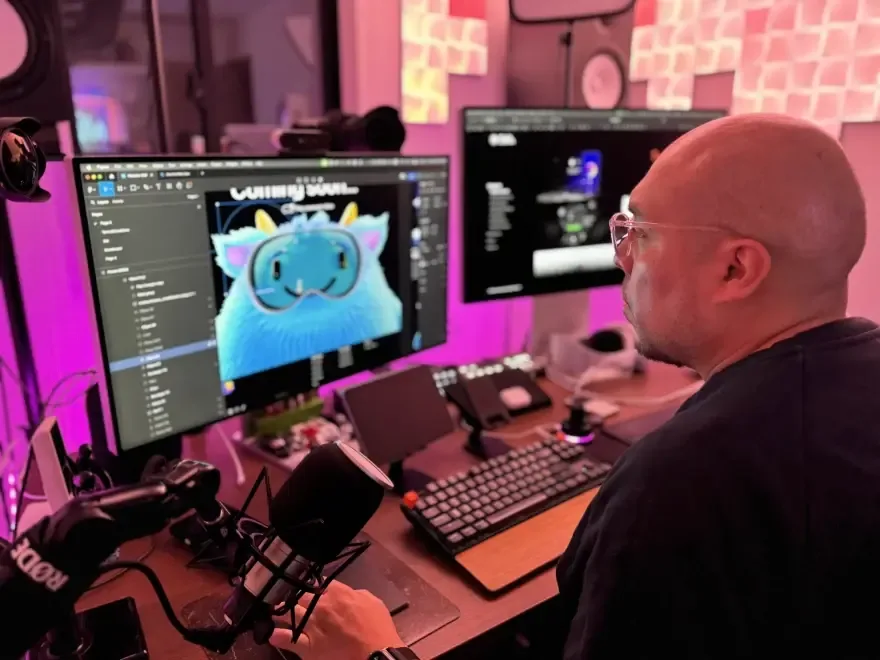
Why We Built Four Different Apps
As Arabic4Kids grew, we started hearing from families who wanted the same kind of beginning in other languages.
We also learned that an alphabet cannot simply be translated and placed inside a generic language template.
Every language has its own sounds, structures, writing traditions, and learning needs. Arabic reads from right to left and changes shape as letters connect. English, French, and Spanish each have their own pronunciation patterns and letter relationships. Each language deserves an experience designed around what makes it distinct.
That understanding grew into Studio4Kids and four dedicated alphabet-learning apps:
- Arabic4Kids presents authentic right-to-left script and lets families choose Modern Standard or Egyptian Arabic.
- English4Kids gives children a playful introduction to English letters and sounds with native pronunciation.
- French4Kids is designed around the sounds and letter foundations young French learners need.
- Spanish4Kids gives Spanish letters and sounds their own dedicated learning experience.
Each app is shaped around the alphabet it teaches. What they share is our commitment to native voices, purposeful play, visible progress, privacy, and thoughtful design.
The languages are different, but the promise remains the same: Help every child begin with confidence, one joyful letter at a time.
Growing Without Losing the Reason We Began
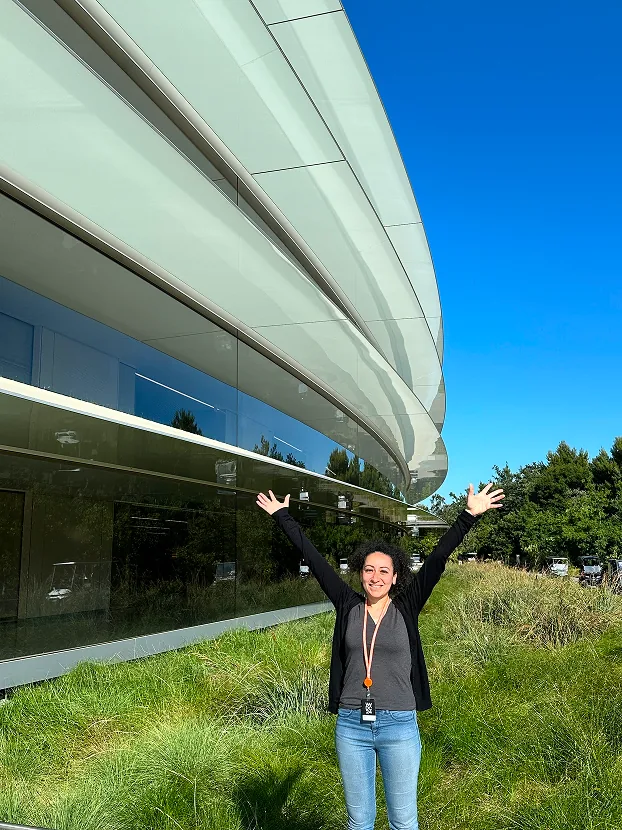
Arabic4Kids began with one very personal need, but it has taken us further than we imagined. It later joined Apple Entrepreneur Camp, an experience that helped us strengthen the product and grow as a team. The full story of that milestone lives in A Journey with Apple.
Today, Studio4Kids is available across iPhone, iPad, Mac, Apple Watch, and iPhone Duo. Each platform gives us a different opportunity to make the learning experience more useful for families.
On iPhone Duo, the lesson responds as the device opens, closes, or partially folds. The outer display supports a focused, one-letter-at-a-time activity. Opening the device creates more room for animation, guided tracing, and play. In partially folded positions, letters and controls remain clear, and the child’s progress continues as the device changes shape.
We do not add a platform simply because it is new. We explore it when it can make learning clearer, more natural, or more enjoyable for a child. The technology may change, but the reason behind the work does not.
What Comes Next
We are still building.
We want to keep improving how children meet an alphabet, practice each letter, and develop the confidence to continue learning. We will keep listening to families and refining the four apps without losing the personal care that started everything.
We also know that an alphabet is only the beginning. A letter can become a word. A word can become a conversation, a story, or a moment shared with someone a child loves.
Studio4Kids began with one child and one alphabet. Today, it helps more children begin discovering the languages that matter to their families.
That is the experience we are building, one joyful letter at a time.
One letter today. A world of connection tomorrow.
Sylvia Said, a Co-Founder and Senior Product Designer, is a driving force in the intersection of entrepreneurial vision and design excellence. With a career focused on creating compelling user experiences, Sylvia has shaped innovative products and established a distinct design language for successful ventures. Her commitment to user-centric design is evident in meticulous attention to detail and a pursuit of excellence. As a co-founder, Sylvia not only shapes strategic direction but fosters a collaborative work culture. Beyond the boardroom, she passionately advocates for diversity in design and mentors the next generation of creatives. With Sylvia Said leading the way, the synergy of entrepreneurship and design unfolds, yielding groundbreaking products and lasting impact.
Latest News
A Journey with Apple: How Arabic for Kids Joined the Entrepreneur Camp Cohort 19
Empowered by Connection: How Women in Tech Inspire the Future at Apple
Inside WWDC 2024: A Creative Journey to the Heart of Apple